
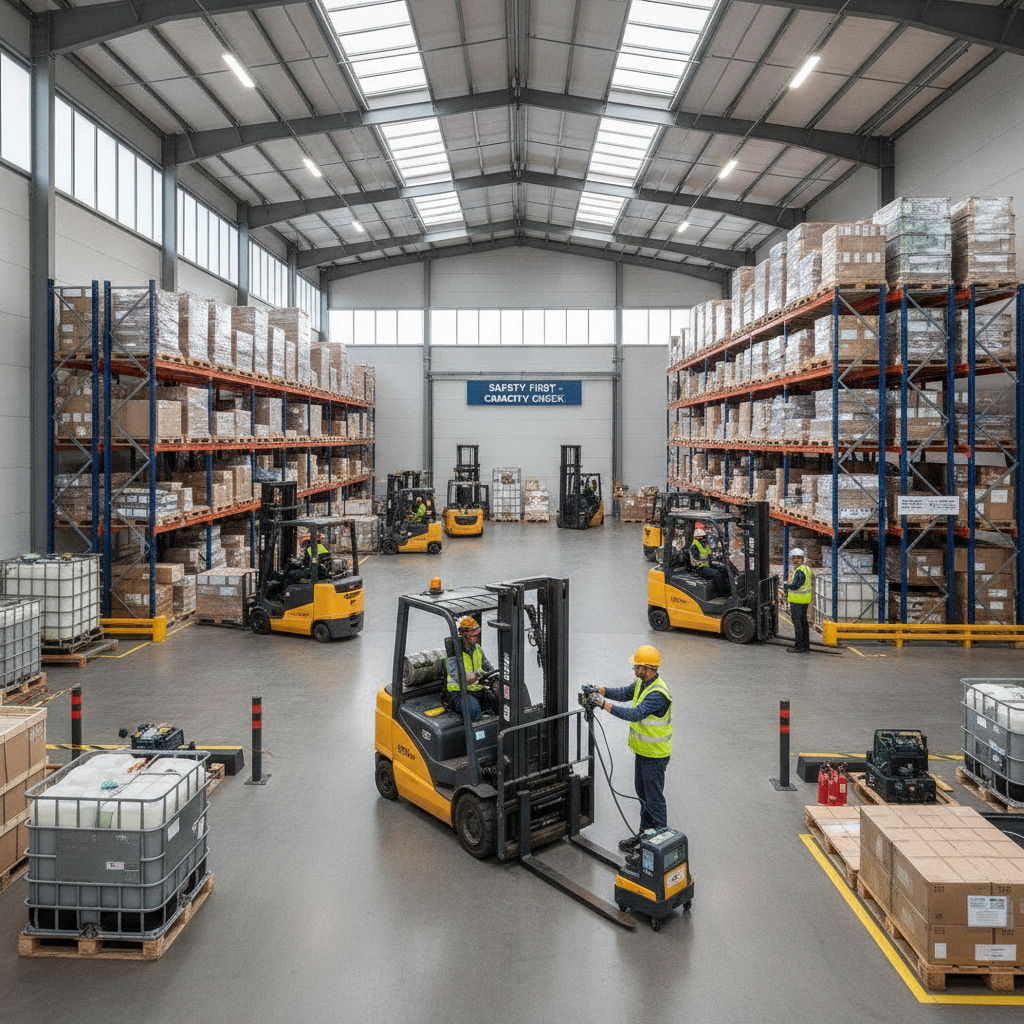
Choosing the right forklift for your business is a decision that can impact your operations for years to come. For businesses considering Forklift Sales Rockwall TX, understanding load capacity is one of the most critical steps before making a purchase. Whether you run a small warehouse, a bustling distribution center, or a local retail operation, selecting a forklift with the proper load capacity ensures safety, efficiency, and long-term cost savings. In this guide, we’ll break down what load capacity really means, why it matters, and how you can evaluate it for your unique needs. We’ll also explore the practical factors that go beyond the numbers, like attachments, load centers, and your actual workflow, to help you make a confident, informed choice. If you’re new to forklifts or just want to avoid costly mistakes, this article is your roadmap to buying smarter and safer.
Understanding Forklift Load Capacity Basics
Load capacity is the maximum weight a forklift can safely lift and transport. It’s more than just a number on a spec sheet, it’s a critical safety and operational factor. Every forklift is designed with a specific load capacity, which is usually displayed on the manufacturer’s data plate. Exceeding this limit can lead to tipping, mechanical failure, or serious workplace accidents. For local businesses, knowing your typical load weights and the heaviest items you’ll ever need to move is the starting point for evaluating which forklift models to consider. It’s important to remember that load capacity isn’t just about the weight itself, but also where and how that weight is positioned on the forks. The further the load’s center of gravity is from the forklift’s backrest, the lower the effective capacity becomes. This is why understanding load center, the distance from the vertical face of the forks to the load’s center of gravity, is so important. Many manufacturers rate their forklifts at a standard 24-inch load center, but if your loads are longer or oddly shaped, the actual safe lifting capacity could be significantly less. For more in-depth guidance and to connect with local experts, Forklift Rescue offers resources and advice tailored to small business needs.
How Attachments and Accessories Affect Capacity
It’s common for businesses to use forklift attachments such as side shifters, clamps, rotators, or fork extensions to handle specialized loads. However, every attachment you add to a forklift reduces its rated capacity. That’s because attachments add weight to the lifting mechanism and often shift the load center forward, which changes the physics of balance and stability. For example, a standard 5,000-pound forklift might only be able to safely lift 4,000 pounds when equipped with a heavy-duty clamp or a long set of fork extensions. Before purchasing, always check the manufacturer’s derating chart or consult with your dealer to see how your chosen accessories will impact capacity. Don’t rely on guesswork, using a forklift beyond its adjusted capacity can void warranties and create serious safety risks. If you’re considering both new and used equipment, it’s crucial to factor in how attachments will affect your options and costs. For a detailed comparison, see Buying New vs. Used Forklifts in Rockwall TX: A Cost-Benefit Analysis for Local Businesses for insights on how attachments impact both types of purchases.
Evaluating Your Real-World Load Requirements
To make an informed forklift purchase, you need to move beyond generic capacity ratings and look at your actual day-to-day operations. Start by analyzing the types of loads your team handles: Are they uniform pallets, irregular machinery, or oversized construction materials? Measure the typical weight and dimensions of your heaviest loads, and pay close attention to their center of gravity. If you occasionally move loads that are much heavier or bulkier than your average, size your forklift for the worst-case scenario, not just the everyday routine. Also, consider how often you’ll be lifting at full capacity. Frequent heavy lifting puts more strain on the equipment and may require a more robust model. Don’t forget environmental factors: If your facility has ramps, uneven surfaces, or tight aisles, these can affect the forklift’s stability and maneuverability when carrying heavy loads. For those comparing purchase versus rental options, understanding your peak load needs is essential. For a breakdown of rental costs and how they relate to load capacity, check out Rockwall, TX Forklift Rental Costs: Daily, Weekly, and Monthly Rates Explained.
The Role of Load Center in Safe Operation
Load center is a concept that often gets overlooked, but it’s crucial for safe forklift operation. The load center is the distance from the vertical face of the forks to the center of gravity of the load. Most forklifts are rated at a 24-inch load center, which works well for standard pallets. However, if you regularly handle longer or bulkier items, the load center will increase, and the effective lifting capacity will decrease. For example, a 5,000-pound forklift rated at a 24-inch load center may only be able to lift 3,500 pounds if the load center increases to 36 inches. This reduction happens because the farther the load is from the forklift’s fulcrum, the greater the tipping risk. Always check the manufacturer’s capacity chart for your specific load dimensions and avoid making assumptions based on the maximum rating alone. Training your operators to recognize and adjust for different load centers is just as important as choosing the right equipment.
Comparing Forklift Types for Different Work Environments
Not all forklifts are created equal, especially when it comes to load capacity and the environments they’re designed for. Counterbalance forklifts are the most common and versatile, suitable for indoor warehouses and outdoor yards. Reach trucks are ideal for narrow aisles and can lift loads to greater heights, but often with lower base capacities. Rough terrain forklifts, on the other hand, are built for outdoor construction sites and can handle heavier loads on uneven surfaces. Electric forklifts are typically used indoors and may have lower capacities compared to diesel or propane models, but they offer quieter operation and less maintenance. When evaluating which type fits your business, consider not just the maximum weight but also the frequency of heavy lifts, the height you need to reach, and the surfaces you’ll be driving on. Each type comes with its own pros and cons, so match your forklift to your most demanding tasks, not just your average ones.
How Facility Layout Influences Capacity Needs
Your facility’s layout plays a significant role in determining the right forklift load capacity. Tight aisles, low doorways, and limited turning space can restrict the size and type of forklift you can use. Larger, higher-capacity forklifts often need more room to maneuver, which can be a challenge in older buildings or compact warehouses. Measure your aisles, doorways, and storage heights before shopping for equipment. In some cases, you might be better off with multiple smaller forklifts rather than one large unit, especially if your loads are distributed throughout the facility. Also, consider the flow of goods, are items being moved from receiving docks to high racks, or from ground level to mezzanines? The more vertical movement required, the more you’ll need to consider not just capacity, but also maximum lift height and stability at elevation. Don’t overlook the impact of flooring type and condition; rough or uneven floors can limit the safe capacity of certain forklift models.
Safety Factors When Matching Forklift to Load
Safety should always be the top priority when evaluating forklift load capacity. Overloading a forklift is one of the leading causes of tip-overs and workplace injuries. Beyond the manufacturer’s rating, consider the training and experience of your operators. Even the best equipment can become dangerous in inexperienced hands, especially when handling loads at the upper end of the capacity range. Make sure your team understands how to read the data plate, recognize changes in load center, and adjust for attachments. Regular safety audits and refresher training can help prevent accidents. Additionally, always use the right personal protective equipment (PPE) and enforce clear safety protocols. If you’re purchasing a used forklift, have a qualified technician inspect the hydraulic system, brakes, and mast for signs of wear that could affect safe capacity. Remember, the safest forklift is one that’s properly matched to your actual operational needs, not just the biggest or most powerful model available.
Budgeting for Capacity: Balancing Cost and Performance
Budget is a major factor for small businesses, but it’s important not to cut corners when it comes to load capacity. Buying a forklift that’s too small for your needs can lead to frequent repairs, increased downtime, and even costly accidents. On the other hand, over-investing in a high-capacity forklift you rarely use can tie up capital that could be better spent elsewhere. The key is to find the sweet spot: a forklift that meets your heaviest load requirements without excessive overcapacity. Consider the total cost of ownership, including maintenance, fuel or electricity, insurance, and operator training. If your load requirements fluctuate seasonally, you may want to supplement your fleet with rentals during peak periods. Work with reputable dealers who can help you analyze your workflow and suggest the most cost-effective options. Remember, the cheapest forklift isn’t always the best value if it can’t safely and efficiently handle your business’s demands.
Reading and Interpreting Manufacturer Data Plates
Every forklift comes with a manufacturer’s data plate, sometimes called a capacity plate, which displays the model’s rated capacity at specific load centers and lift heights. It’s essential to read this plate carefully, as the numbers can change significantly depending on how the forklift is configured. For example, a forklift might be rated for 5,000 pounds at a 24-inch load center and a maximum lift height of 10 feet, but only 3,800 pounds at a 36-inch load center or 15 feet. If you add attachments or change the fork length, the dealer should provide an updated data plate reflecting the new capacity. Never operate a forklift if the data plate is missing, damaged, or illegible. Make it a standard practice to review the data plate with every new operator and anytime you change attachments or load types. This simple step can prevent dangerous assumptions and keep your workplace safe.
Common Mistakes When Assessing Forklift Load Capacity
Even experienced business owners can make mistakes when evaluating forklift load capacity. One of the most common errors is relying solely on the maximum capacity rating without considering real-world factors like load shape, attachments, or lift height. Another mistake is underestimating the impact of uneven floors, ramps, or outdoor conditions, which can reduce safe lifting limits. Some buyers overlook the importance of regular maintenance and inspections, which are crucial for maintaining safe capacity over time. Others fail to plan for future growth, choosing a forklift that meets today’s needs but quickly becomes inadequate as the business expands. To avoid these pitfalls, work closely with your dealer, involve your operators in the evaluation process, and always err on the side of caution. Investing a little extra time upfront can save you from costly repairs, downtime, and safety incidents down the road.
| Forklift Type | Typical Capacity Range | Best For |
|---|---|---|
| Counterbalance | 3,000 – 12,000 lbs | General warehouse, indoor/outdoor use |
| Reach Truck | 2,000 – 5,500 lbs | Narrow aisles, high stacking |
| Rough Terrain | 5,000 – 36,000 lbs | Outdoor, construction, uneven surfaces |
| Electric | 3,000 – 8,000 lbs | Indoor, food storage, low emissions |
Final Thoughts
Evaluating forklift load capacity before purchasing is about more than just checking a number, it’s about understanding your business’s unique needs and ensuring long-term safety and efficiency. By considering factors like attachments, load center, facility layout, and real-world workflow, you can avoid common pitfalls and make a smart investment. Remember to consult manufacturer data plates, involve your operators in the process, and never hesitate to ask your dealer for clarification or guidance. The right forklift will not only keep your team safe but also help your business grow and thrive. Take the time to assess your requirements thoroughly, and you’ll be rewarded with equipment that serves you well for years to come.